Many small business owners think content creation means product photoshoots, polished videos, and a constant stream of new promotions. They assume they need to keep coming up with fresh ideas to stay visible online.
But a business doesn't have to produce something new every day to have something worth sharing.
A hair seller, for example, can create content while sourcing an order, checking the product, preparing it for delivery, or answering customer questions.
Each activity offers a different way to show potential customers what the business sells and what buying from it involves.
The opportunity is to stop treating content creation as a separate task and start recognising the useful stories, demonstrations, and answers already present in your work. Once you know what to look for, everyday business activities can become a practical source of content ideas.
How to Create Behind-the-Scenes Content for Your Small Business
Start by looking at what happens between a customer placing an order and receiving the product or service. That process often contains details customers rarely get to see.
A hair seller might show how an order is sourced and checked before delivery. A baker could record the preparation and decoration of a cake. A fashion designer might explain why a particular fabric was chosen for a customer's outfit.
These videos do more than show that the business is active. They help potential customers understand the work behind the product and give them a clearer idea of what to expect.
The important thing is to choose details that matter to the buyer. Recording yourself packing a box, for example, can be useful if it shows how you protect fragile items. Showing how you check an order can reassure customers that you pay attention to accuracy.
However, filming every routine task won't necessarily give people a reason to watch. Focus on the parts of your process that answer a question, demonstrate care, or help customers understand what goes into your product or service.
Before your next order or appointment, ask yourself: what part of this process might a customer want to understand before buying? Record a short clip or take a few photos, then explain what's happening and why it matters.
You already have the activity. Your job is to make its value clear.
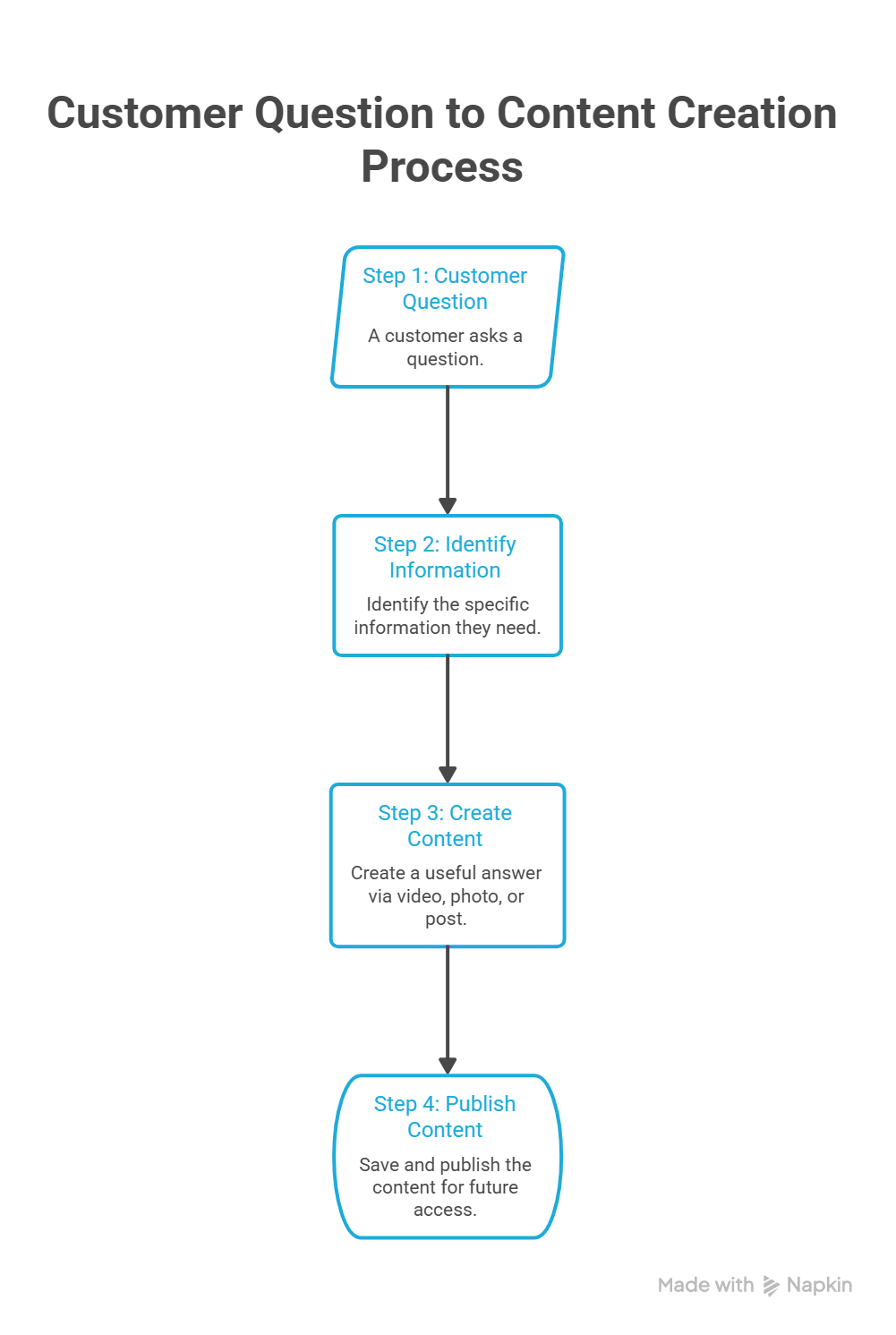
How to Create Educational Content From Customer Questions
Every question a customer asks gives you an opportunity to create content that could help someone else make a buying decision.
Think about the questions you answer repeatedly. Customers may want to know how a product works, which option is right for them, how long delivery takes, or how to maintain something after purchase.
Instead of answering these questions only in private conversations, turn useful answers into content that other potential customers can find.
For example, a hair seller who regularly gets asked how to identify good-quality human hair could create a short video explaining what to check before buying. A furniture maker could explain the difference between two types of wood, while a baker could show customers how to store a cake properly.
The key is to answer the question clearly rather than turning every post into a sales pitch. Demonstrate the answer where possible, show how the product works, and explain anything a customer might misunderstand.
You can also organise these questions into a simple content bank. Keep a note on your phone and add questions whenever customers ask them. When you're ready to create something, choose one question and turn your answer into a short video, photograph, or written post.
Over time, you'll build a collection of useful content based on what people actually want to know about your business.
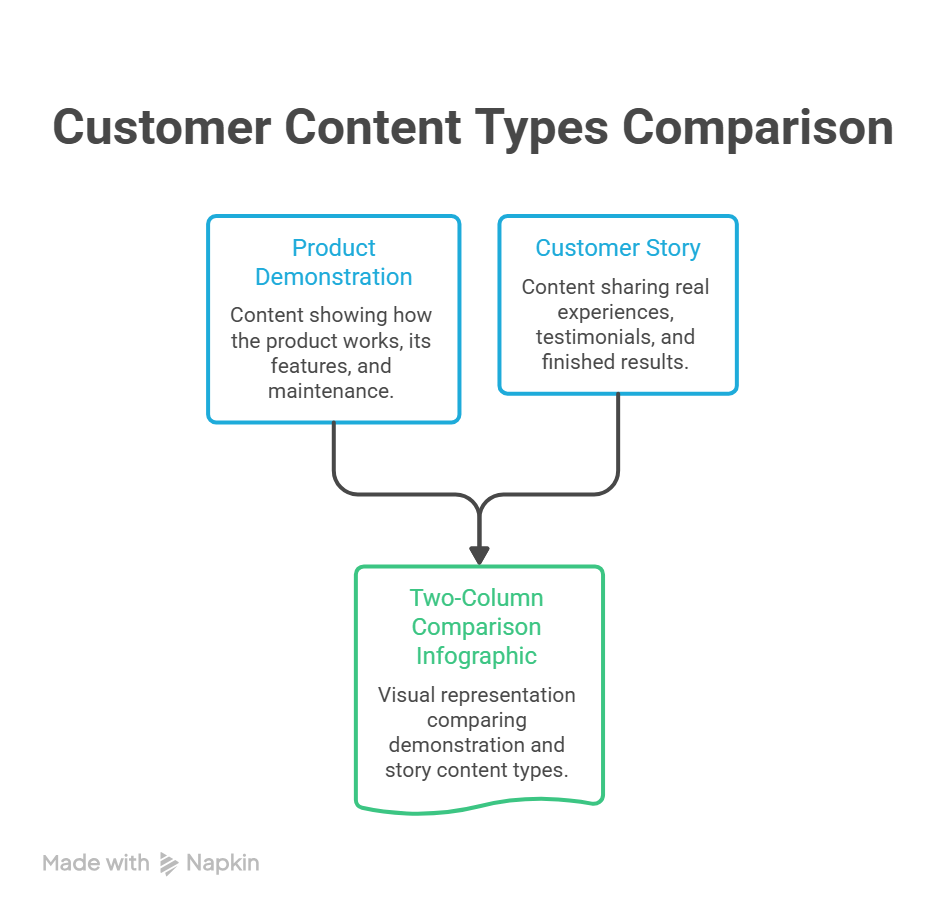
Product Demonstrations and Customer Stories: Content That Builds Buying Confidence
Sometimes, customers understand what a business sells but still hesitate because they aren't sure what they will get.
A product description can explain its features, but a demonstration shows how it works. A customer story helps potential buyers understand what the experience is like after making a purchase.
A hair seller, for example, could show the difference between two hair textures, demonstrate how a particular wig looks when styled, or explain how to care for it. Instead of simply posting a picture and price, the business gives potential buyers more information to consider.
Customer experiences offer another opportunity. With the customer's permission, you could share a review, record a short testimonial, or show the finished result of a service. A fashion designer might share a customer's outfit before delivery, while a baker could show the finished cake being handed over.
The important thing is to make these posts specific. Instead of simply claiming that your product is excellent or that customers love your service, show what makes it useful, what problem it addresses, or what customers appreciated about the experience.
You don't need an elaborate production setup. A clear phone recording, a few well-chosen photographs, and a useful explanation can communicate more than a heavily edited video that tells viewers very little.
The goal is to help potential customers picture what buying from your business would actually look like.
How to Turn One Business Activity Into Multiple Content Ideas
One reason small business owners run out of content ideas is that they treat every post as a completely separate project. After publishing one video, they start looking for an entirely new topic for the next one.
But a single business activity can provide material for several posts if you approach it from different angles.
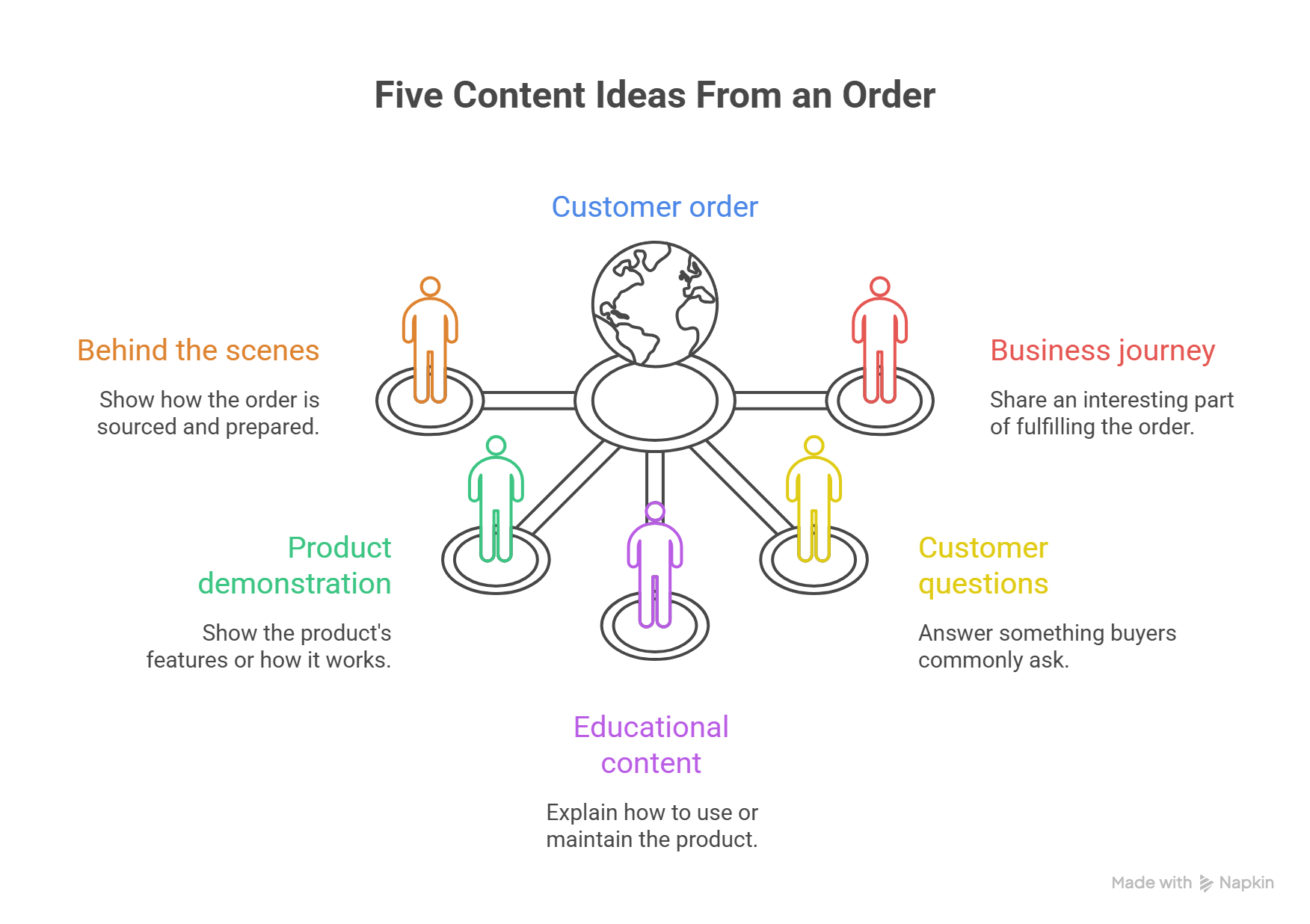
Imagine a hair seller receives an order. That one order could become several pieces of content:
- Behind the scenes: Show how the hair is sourced and prepared.
- Product demonstration: Show its texture, length, or how it looks when styled.
- Educational content: Explain how customers can care for the hair.
- Customer questions: Answer something buyers commonly ask before ordering.
- Business journey: Share an interesting part of the process of fulfilling the order.
Each post serves a different purpose, even though they all come from the same activity.
You can apply this approach to almost any small business. A baker preparing a cake could record the decorating process, explain how to store the finished cake, answer a common question about ingredients, or share the customer's reaction. A furniture maker could document material selection, construction, finishing, and the completed piece.
The next time you finish an order, complete a project, or serve a customer, take a moment to consider what you could teach, demonstrate, explain, or share from that experience.
You don't have to publish every idea. The point is to recognise that one activity can give you several useful options, so you're not constantly starting from scratch.
How to Create Content for Your Small Business on a Budget
You don't need an expensive camera or professional lighting to create useful content for your business.
For many small businesses, a smartphone is enough to get started. What matters more is having something useful to show and making sure people can see and understand it.
Start with the environment you already work in. A baker can record the decorating process near a window where natural light comes in. A fashion designer can use a clean section of the workshop to show how an outfit is made. A product seller can arrange a few items neatly on a table before recording a demonstration.
Pay attention to a few basic details:
- Lighting: Record near a window during the day when possible. Good lighting makes products and details easier to see.
- Background: Keep the area around your product reasonably tidy so viewers can focus on what you're showing.
- Audio: Record in a quiet environment, especially when explaining something. If the surroundings are noisy, record a voice-over afterwards.
- Stability: Rest your phone on a stable surface or use an affordable phone stand to prevent shaky footage.
You can also use free or low-cost editing tools to trim unnecessary footage, add captions, and arrange clips into a short video. Complicated transitions and effects aren't necessary to make your content useful.
However, working with a small budget shouldn't mean sacrificing clarity. If viewers can't see the product, hear your explanation, or understand your message, the content loses much of its value.
Start with the tools available to you. You can improve your setup gradually as your business grows, rather than delaying content creation until you can afford professional production.
How to Turn Social Media Content Into Customer Enquiries
Creating useful content is a good start, but publishing regularly doesn't automatically bring customers to your business.
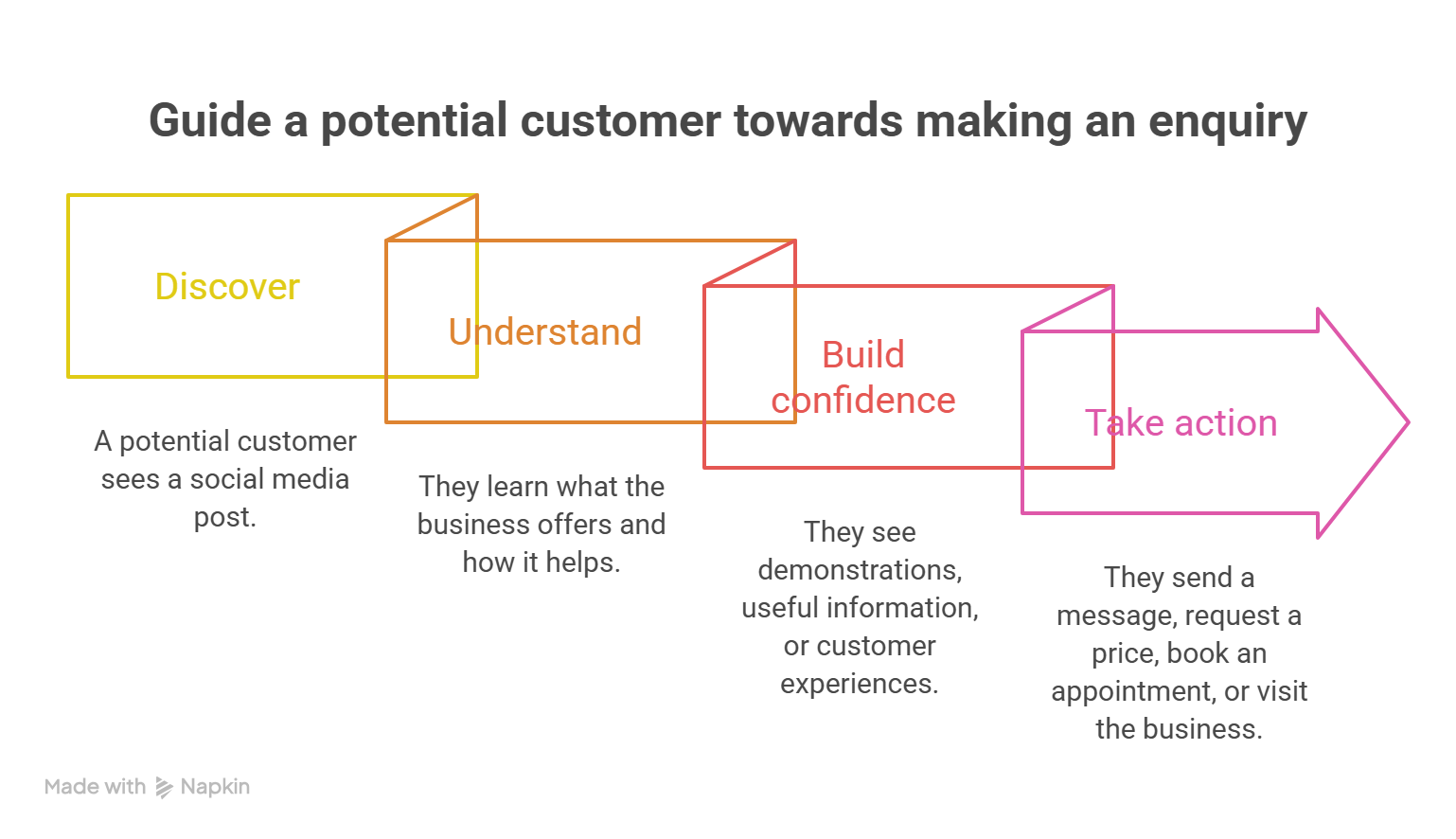
People need to understand what you're offering, who it's for, and what they should do if they're interested. If your content leaves these things unclear, potential customers may watch your videos, like your products, and move on without making an enquiry.
Start by making your offer clear. If you're selling hair, don't just show a beautiful wig. Include the type of hair, available lengths, price where appropriate, and how someone can place an order. If you offer a service, explain what it includes and who would benefit from it.
Next, give people a clear reason to take action. Your caption or video could invite them to:
- Send you a message to check availability.
- Ask for a price list or catalogue.
- Book an appointment.
- Visit your store or website.
- Share their requirements so you can recommend the right option.
Make it easy for interested people to contact you. Keep your contact details accessible, respond to enquiries promptly, and provide enough information for them to understand the next step.
You should also pay attention to the questions and responses your posts generate. If several people ask about pricing, delivery, or availability, those questions may reveal information missing from your content. Use that feedback to improve future posts.
Remember that not every post needs to make a direct sale. Some posts introduce your business, others educate potential customers, and some demonstrate why your product or service is worth considering.
Together, these posts help people move from discovering your business to feeling confident enough to contact you.
The goal isn't simply to get people watching. It's to give the right people enough information and a clear path to take the next step.
Start Creating Content With What Your Business Already Has
You don't need to wait until you have a professional camera, a bigger budget, or a long list of creative ideas before you start creating content.
Your products, daily activities, customer questions, completed orders, and customer experiences already give you material to work with. The challenge is learning to recognise which parts are worth sharing and how they can help someone understand your business.
Start with one activity you'll be doing this week. It could be preparing an order, completing a customer's project, answering a common question, or demonstrating how one of your products works.
Record a short video or take a few photographs. Explain what you're showing, why it matters to a potential customer, and what they can do if they're interested.
You don't need to turn every activity into a post. Focus on sharing information that helps people discover your business, understand what you offer, and feel more confident about buying from you.
As you do this consistently, you'll build a collection of content from the work you're already doing. More importantly, you'll give potential customers more reasons to understand, trust, and contact your business.
Your next content idea might not require a new activity. It might simply require looking at your existing work from a customer's perspective.